Income Tax Return Filing Due Dates for FY 2018-19 (Last Date)

File Tax Returns for A.Y. 2019-20 before 31st March with INR 10,000 Penalty

The income tax department notified the taxpayers for late filing of tax returns for A.Y. 2019-20, along with a penalty of INR 5000 (on filing the return after the due date but on or before 31st December) and INR 10000 (on the filing of return after 31st December to 31st March). The taxpayer has to file the late filing of tax returns for A.Y. 2019-20 before 31st March anyhow. Also to note that the penalty is applicable even if the taxpayer files the returns before 31st March while there is no option to file the returns after 31st March 2020.

Last Date of Income Tax Return Filing for AY 2019-20

(Assessee who are required to furnish report under sec 92E)

  • Due date of filing the Income Tax Return by Assesse who are required to furnish report under sec 92E is 30th November 2019.

Advance Income Taxes Filing Due Dates FY 2018-19

If the tax liability is more than Rs 10,000 in a financial year then advance tax needs to be paid by the assessee.

15th June (15%) | 15th Sept. (45%) | 15th Dec. (75%) | 15th March (100%)

The assessee who are covered under section 44AD, are also required to pay the advance tax on or before the 15th march of the previous year.
  • A Company
  • A Person (Other Than a Company) whose accounts are required to be audited under this Act or under any other law for the time being in force, or
  • A working partner of a firm whose accounts are required to be audited under this Act or under any law for the time being in force

What is the Income Tax?

There are two types of tax levy one is direct tax second one is an indirect tax. Income tax is a direct tax which is directly attributable to the income of the assessee. Income which is generated from the various head of income viz.Salary, House Property, Business, Capital Gain and Income from other sources. The assessee has to pay Income tax if his total Income after allowing Chapter VI-A Deduction is more than the taxable income limit.

Filing Income Tax Return Due Dates for FY 2018-19 (AY 2019-20)

There is a different category of taxpayer viz. Individual, HUF, Firm, LLP, Company, Trust and AOP/BOI. Due Date is different according to audit or non-audit case of such categories as defined in section 139(1)

Last Date of Income Tax Return Filing for AY 2019-20 (Non-Audit Cases)

  • Due date of filing the Income Tax Return by Assesse whose Books of Account are not required to be audited is 31st July 2019. The income tax department has extended the due date till 31st August 2019Notification here

Filing Income Tax Return Due Date for AY 2019-20 (Audit Cases)

The due date for filing the Income Tax Return by Assesse is 30th September 2019.

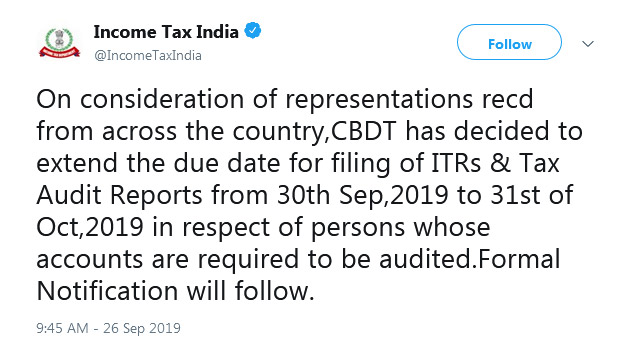
Note: “On consideration of representations recd from across the country,CBDT has decided to extend the due date for filing of ITRs & Tax Audit Reports from 30th Sep, 2019 to 31st October 2019 in respect of persons whose accounts are required to be audited. Formal Notification will follow.” as Income tax department tweeted on 26th September.
IT Department Released Online Complaint Form for Technical Issues

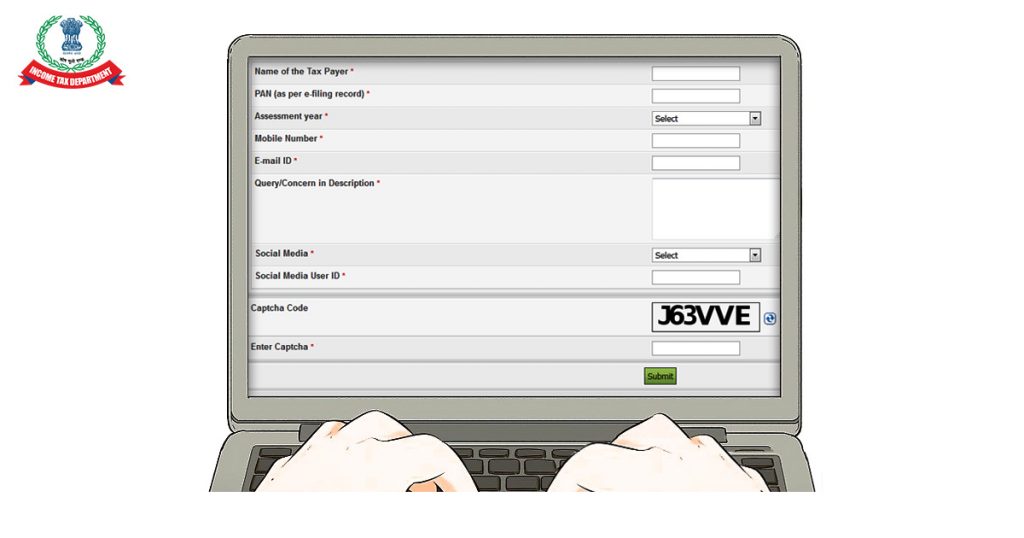
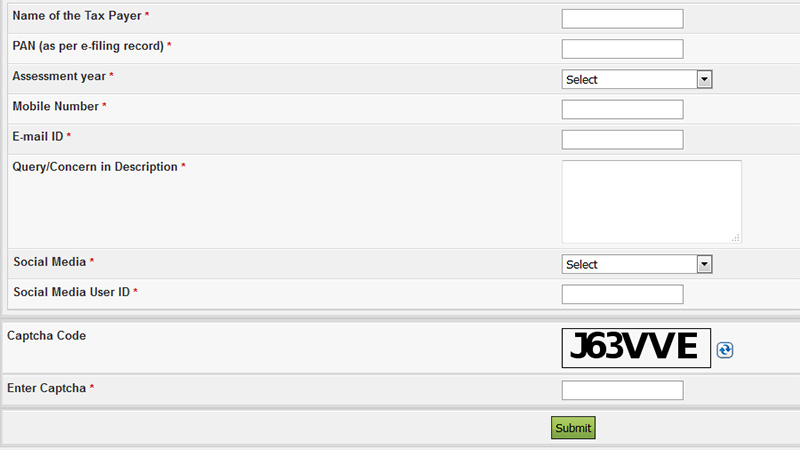
Nowadays, tax-filing is a digital-centric mechanism with every process being digitally accomplished. Going back to the issue of the IT department’s inefficient redressal mechanism, the department is now directing all the users to file a complaint online via a simple form available on the link: Incometaxindiaefiling.gov.in/e-FilingGS/Services/ORM.html

Marked are instances when people call on the numbers mentioned on the IT department’s websites to address their tax-related queries, the calls either get unanswered or busy. People end up blaming the IT department’s redressal mechanism. Now the department has come up with the solution for the same, all your issues are expected to be heard and solved on time

Any issue related to refunds, e-verification, tax-ability, tax filing process, the rectification of filed returns, discrepancies between TDS deducted, Form 16 or any other technical issues in validating PAN, Aadhaar ID, can easily be quoted via the above-mentioned Complaint Form. One can even put forward the queries which were earlier communicated to e-nirvana on the Income Tax department’s e-portal and are unresponded. There is no need to create a separate login to register a query.

Read also:

Income Tax Online Compliant Form Format
  • Contents of the form include:
  • Taxpayer’s name
  • PAN (Permanent Account Number)
  • Assessment Year for which query is placed
  • Mobile number/email

To one’s surprise, the form also has a room for entering a social media ID (Twitter/FaceBook/Quora) of the assessee. Anyone who is not willing to share his/her social media account or does not have one then he/she can provide only his email id. Following the submission of the form, a ticket number will be generated and will be communicated to the assessee on his mail id and mobile number. Information related to tracking the status of the complaint filed is still to be updated by the department.

Companies Knocked Court Gates Against GST on Land Lease Agreement

Some major companies have recently moved towards legal proceedings in court to seek permission for revoking or making a credit claim against GST on long-term land lease deals. Many tax experts, on this matter, have suggested that if a particular recipient in the long-term land lease deal decides to build a commercial building on the same, then he cannot claim an input tax credit against the GST paid for the same.

One of the tax experts at Khaitan & Co. suggested that “The recipient has to bear 18% GST for various long term lease agreements. Due to the absence of provision of credit, it becomes a cost. We have challenged not getting credit, especially when the output supply is taxable, for example, a hotel or any other commercial property.

Currently, 18% of GST is charged on long term lease transactions by the government, which has been strongly opposed by many companies.

Recently, some of the companies in Rajasthan have filed a petition in the Rajasthan High Court demanding that GST should be removed from the long-term land lease deals or they should be allowed to claim a tax credit against the same. For long-term lease deal of 99 years, GST is levied. In most of the cases, the land leased in such long-term deals belongs to the government and is offered to build a hotel or port.

In the current case, the question arises whether the lease payment received by the government against land provided to the recipient for the purpose of building a hotel or port, is a tax input or not? Some companies have argued that leasing should be considered as an input for which ITC can be claimed.

As per the current GST framework, in order to claim an input tax credit (ITC), the companies must prove that they have paid tax against raw material used to build the final product. ITC is a mechanism under the GST system, in which a portion of the tax paid on raw material can be used in lieu of future tax liabilities.

Read Also:High Court Asks to Suspend Advance Authorization Licence of Exports

GST: High Court Asks to Suspend Advance Authorization Licence of Exports

A case relating to advance authorization scheme has been pending in the Gujarat High Court. Abhishek Rastogi, counsel, petitioners, and partner at Khaitan & Co stated that apart from Gujarat, the High Courts in different states are still getting these kinds of notices, so the Punjab and Haryana Court has initiated actions. “The pre-import condition has been a subject of debate even after the stay by the Gujarat HC against DRI notices.”

An advance authorization scheme has been implemented by the government officials under which the taxpayer doesn’t require to pay basic customs duty on imports, although, he is entitled to pay Integrated Goods & Services Tax (IGST) under the advance authorization scheme which can be claimed in the form of ITC if eligible based on export fulfillment.

Previously, the Central Bureau of Indirect Taxes and Customs (CBIT) and the commerce ministry had implemented a clause of “pre-import” to exempt custom duties on the import under the advance authorization scheme.

After the changes in the advance authorization scheme, the Directorate of Revenue Intelligence (DRI) has started sending notices to the exporters.

The Good and Services tax Council (GST), the Finance Ministry and the Commerce Ministry have received the notification from the Punjab and Haryana High Court to stop providing the benefits of advance authorization scheme to exporters under the Goods and Services Tax (GST) reform.

Karnataka GST Collection Provides Multiple Insights

GST Collection

Karnatak SGST department recently collected increased 14.3 per cent of GST revenues for the 5 months i.e. (April- August ) for the FY 2019-20 (FY 20).

While the Karnataka state has already gained a good amount of GST collections of 33,618 crores in comparison to the target of 76,046 crores for the financial year.

Also, the Karnataka state was successful in increasing taxpayer base from the earlier 4.5 lakh to 8.16 lakhs which is impressive double-digit growth. However, the collections have improved due to the effective implementation of GST.

One of the higher senior of the authorities stated that “Only 20-30 per cent of the GST taxpayer base in the state currently contributes to the major portion of the kitty. The new businesses on-boarding into GST system may not have any significant impact in terms of increased collection.”

While right now there are no sector-wise GST collections, which can make clear how much each industry have collected as per the target. Chief Minister of Karnataka, BS Yediyurappa also asked the tax department for the individual performance of their authority.

As per the target, the Excise revenues have been 9,145.36 crores (April-Aug 2019) against the target of 20,950 crores while taking the figures of stamps and registration department has collected 4,620 crores (April-August 2019) in the front of target 11,828 crores for FY20.

Read Also: GST: Aadhaar Authentication Now A Prime Requirement To Qualify As Dealer

Former Chief Minister of Karnataka H D Kumaraswamy in the meeting attended of Niti Aayog has asked for the extension in the compensation to the states for better performance which is currently at 2022.

Hotel Industry May Get to See GST Rate Cut

FICCI Low GST on Hotels

The goods and services tax council may try to cut GST rates applicable currently on the hotel industry for the better and therefore all those states which are protesting against the rate cut on the automobile and biscuit sector may also get benefits.

The GST council may also make a decision on central and state expected income compensation-related 15th finance commission’s 2 circulars. The states are demanding the compensation period must be extended from 2022 to 2025.

The government is ready to implement a GST rate cut of 18 per cent on the hotels having the tariff of more than 7500 and having 28 per cent highest GST slab rate.

Read Also: GST Impact on Hotel and Tourism Industry in India

There are other industries which want to dip in the GST rate however that may not be feasible due to the reduction of the state’s revenue. The industries like the auto sector which after the sales slowdown asking for rate cut to 18 per cent.

On the other side, the biscuit industry is requesting for a 5 per cent GST rate from 18 per cent on the biscuits having a rate of lower than 100/- KG. While the states like West Bengal is also on the request to look out for GST rate cut.

It mentioned that the states who have properly followed the BS-VI plan must be given some GST exemption as a consolation. While there are talks on the rate revision for the real estate industry also.

Online Version of GST ANX-1 & ANX-2 Live on Portal for Simplified Returns

GST ANX-1 & ANX-2 Live on Portal

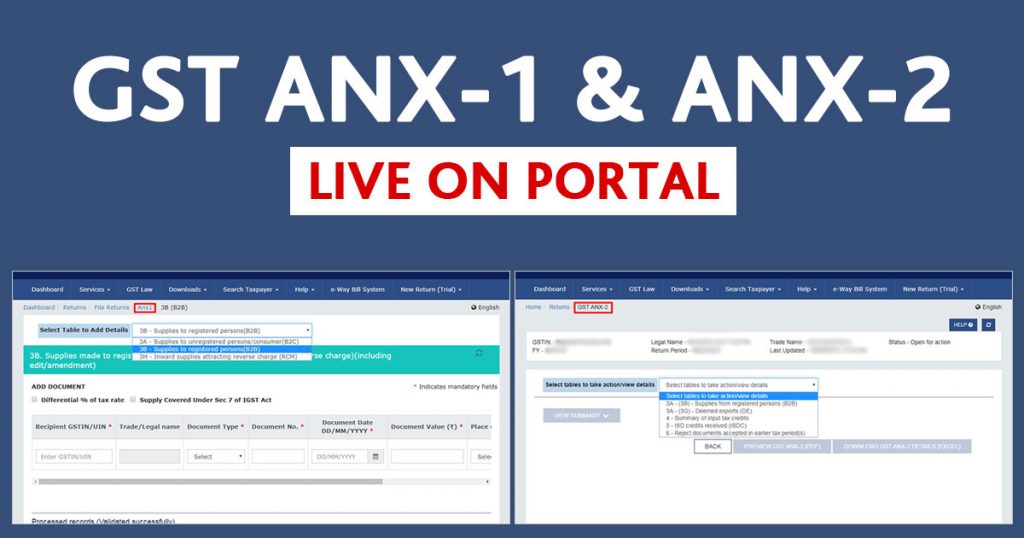
Probing to the requirements of the taxpayer, Goods and Service Tax Network (GSTN) issued two new GST forms Form ANX-1 and ANX-2 online for easy e-return filing.

FORM GST RET-1 (normal), FORM GST RET-2 (Sahaj), GST RET-3 (Sugam) returns, one of the three forms is filed by the taxpayer depending upon the situation. While filing either of the three forms it is mandatory for the taxpayer to also provide Annexure of supplies (GST ANX-1) and annexure of inward supplies (GST ANX-2) as part of these returns.

The offline version of ANX-1 and ANX-2 was earlier introduced by GSTN.
The online version of GST ANX-1 and GST ANX-2 will facilitate the taxpayer with filling in the details of business-to-business (B2B) supplies, business-to-consumer (B2C) supplies and supplies attracting reverse charge in their online returns, without any hassle.

Prakash Kumar, chief executive officer GSTN, favouring the provision said that the online version will provide working on real circumstances and that they would request taxpayers and tax consultants to make use of the online feature and share feedback to help to make further enhancements.

The new simplified returns will replace the existing forms by January 2020.

FM Pressing for GST Rate Cut On Automobiles: Raising Hope of Revival for Auto Players

GST Rates Automobile Industry

Finance Minister Nirmala Sitharaman has shown a beacon of hope for the automobile dealer regarding the alteration of the GST rate on automobiles as an attempt to piece down the gloomy and stagnant scenario of automobile industries.

The industry had been putting up a howl for bringing down the GST rate from 28% to 18% on automobiles. It’s been 10 months that industry is facing downward slope and many imminent automobile dealers are encountering disheartening sales figures.
On Sunday, FM Nirmala Sitharaman presented a squad of measures which includes hiking depreciation benefit to encourage the domestic automobile industry. The government has set forth a proposal to the GST Council to cut down the tax rate from the highest tax bracket of 28 per cent – a measure to deal with the automobile plunge.

The aggregate sales of the top six car manufacturers of India has showcased a drop of more than 29 per cent (year-on-year) in August 2019. Maruti Suzuki, India’s largest carmaker has shown a decline in sales by 36 per cent with 93,173 units of August 2019 in relation to sales of 145,895 units in August 2018. In last both the months i.e. July & August, Maruti has sent less than 100,000 cars to dealerships.
Other five top carmakers – Hyundai Motor India, Mahindra and Mahindra (M&M), Honda Cars, Tata Motors and Toyota has also registered a decline in sales by 16.6 %, 31.6%, 51.3%, 58% and 24.1%, respectively.
Last four months of April, May, June and July of the year 2019 have been the breakdown phase for the automobile industry with the constant decline in sales figure by 17.07, 20.55, 17.54 and 31 per cent, respectively.

Read Also: GST Impact on Automobile and Spare Parts Industry in India

To breathe new life into the sector, few measures have been declared by our Finance Minister on 23rd August. The measures include increment in depreciation benefit on all automobiles from 15 to 30%, holding off the elevation in the registration fee (as proposed) till June 2020 and backpedalling a five-year-old ban on government purchases.

The concern regarding the unanticipated & chronic downturn in the domestic auto market sustains until the customer reaction on introduction to the shift from BS-IV to VI emission regulation in April 2020.

According to FM, the government has foregathered with stakeholders of different industries, including the auto industry, which is behesting assistance and the government is trying to resolve their issues and implement their suggestions. She said, “One of the suggestions was the reduction of GST rate for the automobile sector,”. She also informed that such authorities are in the hand of the GST Council and the next GST council is going to 37th meet on 20th September in Goa.

After the 10th consecutive month of depressing auto sales and the intensifying outcry for a GST rate cut by the auto industry, the government may take a decision that would prove to be good news for auto players. The automobile industrialists are expecting to encounter higher sales in the forthcoming festive season and envisioning GST rate cut as a sales booster.

GST: Aadhaar Authentication Now A Prime Requirement To Qualify As Dealer

GST Registration from Aadhaar Card

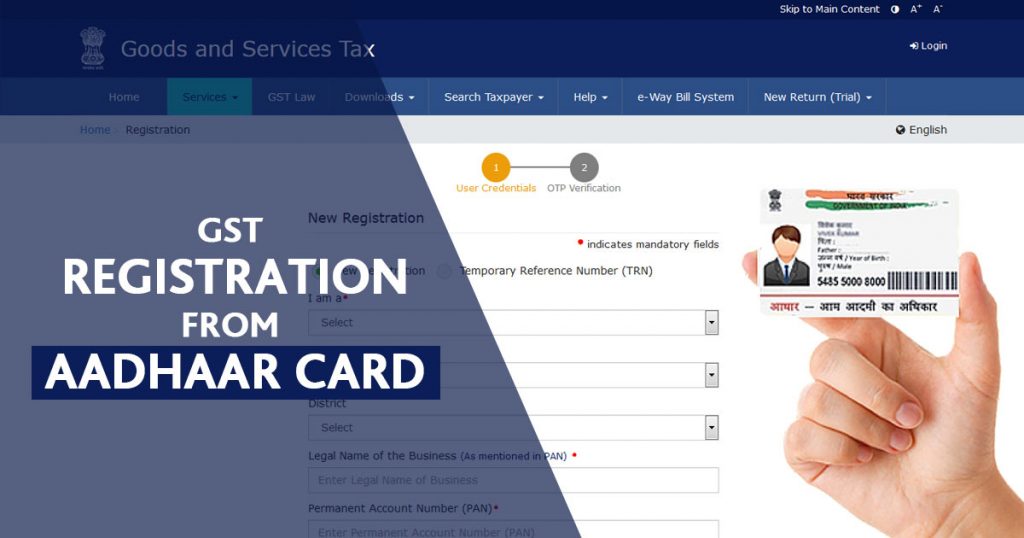
Paying heed to the current scenario where GST evasion is plaguing the society, GST governance is doing anything possible to eradicate the plague. Putting one step forward towards the mission, the government brought an all-new provision according to which Aadhaar authentication or physical verification is mandatory for all the new dealers registering in 2020.

Earlier Aadhaar authentication was optional but now it has become the prime requirement for anyone to qualify as a registered dealer in India.

Bihar deputy CM and one of the ministers of GST Council Sushil Kumar Modi said “In the last two years, we have encountered a good number of deceitful dealers making fake invoices and misleading tax governance. As a measure to avoid such a situation, Aadhaar authentication will now become mandatory for registering as a dealer, which was earlier optional”

Dealers for whom Aadhaar authentication is not done will have to go through a physical verification which will be a three days course monitored by a government official.

Making GST refunds to the taxpayers is another big deal for tax governance, therefore GSTN landed on the decision of issuing all refund payments online from a single source, either by the Central GST or State GST. Applicable from September 24

GSTN proposed to enclose much simpler rules in the system that may be launched from 1 January 2020, said Bihar deputy CM Sushil Kumar Modi.

Know the Benefits of Registered Taxpayers Due to New GST Laws

Benefits of GST After New GST Law

Several changes have been made to the CGST Act, which will benefit the taxpayers in terms of ensuring compliance. The recent update in the different sections of the CSGT Act is related to the tax payments and interest, which will ease out the process of GST return filing for taxpayers. It will also reduce the interest burden from taxpayers.

Here are some of the major amendments that have been made under the CGST Act and how it will benefit the registered taxpayers:

For suppliers of goods, the threshold limit for GST registration has been increased to INR 40 lakh from INR 20 lakh. This change in threshold limit has been suggested by the GST Council during its 32nd meeting, which has now been approved by the Parliament and amended in the CGST act under section 22. Due to this new amendment, the small and medium scale suppliers will be benefited the most. Now, such small suppliers will be able to avoid paying high taxes thanks to the higher tax exemption limit.

Although this higher tax exemption will only be applicable to the supplier of goods. For suppliers in other sections or those selling goods as an e-commerce operation, registration under GST would still be mandatory for inter-state supplies.

For matters related to GST registration, a new subsection has also been added under section 25, that describes the entire registration process. Aadhar authentication for all GST-registered taxpayers, including the first-timers, has also been made mandatory by the government. The registration allocated to a particular person will stand invalid if he/she has not done Aadhaar authentication. This government decision also shows its intention to make Aadhar as a common proof of authentication across all the legal departments.

The best news for taxpayers is that now they will also be able to move their wrongly paid taxes to the correct head as per the latest rectification to section 49 of the CGST Act. In the past, the inability to move wrong paid taxes has made taxpayers hassled a lot, as they were required to pay those taxes again. Now, with this new update, any amount, i.e., taxes, interest, penalties or fee update in electronic cash ledger can be transferred to correct head under IGST, CGST or SGST/UTGST

Another decision that will particularly benefit the registered taxpayers a lot include a reduction in the interest amount levied on taxpayers due to late payment of taxes. Now, with the amendments in section 50 related to interest provisions, taxpayers will only have to pay interest only on that amount of tax which has been paid by debiting the electronic cash ledger. In simple words, the tax amount which has been paid using cash.

Earlier, the taxpayers were bound to pay interest on the entire portion of the tax that was unpaid beyond the due date. This was also inclusive of the input tax credit, which has been critiqued to be unfair or against the established practices by tax experts. Now, the rectification will help taxpayers avoid higher interest burden on them, and even nil interest burden in case of GST payment done utilizing input tax credit.

A new subsection under section 10, which governs the composition scheme has also been added to include the Service Providers under the ploy of this scheme. All Service Providers, having an annual turnover of up to INR 50 lakh and mixed suppliers (supplier of both goods & services) are now also allowed to be a part of the GST composition scheme. This amendment also makes compliance easier for small businesses in terms of filing their returns and maintenance of books of accounts.

Under the revision of CGST Act, a new option for return filing has also been introduced for the specified taxpayers. This return filing option now allows the specified taxpayers to file quarterly returns, unlike the monthly ones applicable earlier. The people option for quarterly returns would still require to make monthly tax payments. Similarly, for composition taxpayers, they need to make tax payments on a quarterly basis while return filing needs to be done annually. This will benefit the small taxpayers in terms of reducing the filing burden and reducing the GST cost associated with it.

The recent changes in the CGST Act also give an indication of the Indian government initiative of moving towards a cashless economy. A new section, namely 31A added in the CSGT Act is a clear reflection of this initiative. This new section added in the CGST Act mandates certain specified suppliers to give the prescribed mode of electronic payments to their recipients. This has been done to curb the usage of cash and to prevent tax evasion, a major problem faced by taxmen today.

In order to stop suppliers from claiming the undeserved benefits under input tax credit and not transferring this benefit to end customers in the form of reduced goods or service prices, the National Anti-profiteering Authority – constituted under section 171 has been formed, which can now force penalty up to 10 per cent on suppliers engaged in such malpractices. This amendment has also been made keeping the end customers in mind, and to pull chains around suppliers engaged in such unethical behaviour.

In conclusion, it can be easily said that the recent amendments made under GST have several welcome moves for the registered taxpayers. It is also anticipated that the journey of GST 2.0 will be easier for everyone, including taxpayers and taxmen, with a more simplified tax approach.