All Key Changes Highlighted of New GST Return Forms

Key Changes New GST Return Forms

The GST Council, along with the government, has accepted a new set of GST return forms with the aim to remove the ongoing issues and simplify the overall return process. The new forms would be implemented from 2019.

A number of changes have been made in the new GST forms, which are being explained here. Source: Harpreet Singh, Partner at KPMG India.

Five Major Changes in the Upcoming GST Returns

  • The first change is in the form of a reduced number of returns. The Council has decided to replace the existing multiple returns with a single return filing. So now, there would be one return filing against multiple returns which are filed presently. As of today, we file multiple returns, including GSTR-1, GSTR-3B, GSTR-2A (for reconciliation purpose), etc. All these will be replaced with one return form.
  • The new return will be simpler than what we have today. The simpler return will only have 5 to 6 tables, one of which will contain details of supply and one is for purchase/input details. Another benefit is that the information in both these tables will be auto-populated, based on the invoices uploaded by the taxpayers. Around 80% of the tables will auto-fetch data from invoices. The dealer will only have to fill the remaining 20% details.
  • Another change is a new return filing method through SMS. The portal will soon start the facility to allow taxpayers to file their GST returns through SMS.
  • Also, there is a change in the way dealers could amend their returns. As of today, there is no provision to amend a return once it is filed. Upon receiving several requests from dealers for introducing a provision for amendments, the Council has decided to do it. The new return filing system would allow taxpayers to amend each of their returns twice and also report negative balance or liability.
  • The new system will have profile-based dealer’s filing of returns. That means a dealer’s profile will be selected based on which they will fill out a questionnaire and proceed to file the return.

Singh summarizes the new return as “upload – lock – pay” system where suppliers upload their invoices (and provide return details), the recipients accept them and thus lock the returns and then the GST is paid.

As for the Sahaj and Sugam schemes, Singh goes on explaining that the option is for dealers whose annual turnover is less than 5 crores and file quarterly returns. Such dealers can either continue with quarterly returns or they can opt for a simpler two return system – one is Sahaj return and another one is Sugam return.

Read Also: Free Download Gen GST Software for Simple GST Return Filing

Sajah return is for B2C suppliers. It is a much simpler return with less number of fields and easy to file. It will be filed monthly. Sugam is for those dealers who are involved in both B2B and B2C supplies. Rest process is the same. The Sajah and Sugam option are only available to dealers with less than 5 crore turnover.

Source: https://economictimes.indiatimes.com/

Steps to Revise TDS Return When Receive PAN Error Notice

Steps to Revise TDS Return

TDS return becomes defective if the PAN entered at the time of filing return is wrong. Once you make such a mistake, the next step is obviously to revise the return.

An applicant receives a notice from the Income Tax Department on submitting the wrong PAN, and then he needs to file a revised return.

While Filing a Revised TDS Return, Following Points Must be Kept in Mind:

1. A justification report needs to be generated from Traces after receiving notice from IT dept. If the reasons mentioned are not duly disclosed.

Steps to Generate a Justification Report:

  • Step1: Login to the traces
  • Step 2: Select the option “Request For Justification Report Download,” given in the defaults Tab.
  • Step 3: Enter the details in the justification report.
  • Step 4: Check the status of Justification Report by clicking “Requested Download” given in the Download Tab.

2. The Justification report is in text format, and it needs to be converted using TRACES Justification Report Generation Utility.

Read Also: Filing Revised TDS Return Online: Step by Step Guide

Steps to Convert the Justification Report:

  • Step1: Login to the traces.
  • Step 2: Go to Requested Downloads under Downloads and click “Click Here.”
  • Step 3: Click on TRACES Justification Report Generation Utility v2.2.

3. Go to console file option present in statements tab and click on it, after finding detailed reasons in justification report. Download the console file and enter the password. The password to access Console File would be ‘TAN_’ (e.g., ABCD12345E_67890).’

4. Download the latest RPU utility form TIN NSDL after downloading the console file. Now, open console file in that utility in correction section. Once done, import the console file, downloaded from traces, and make corrections in the file when it gets opened.
(Image)

5. Once you update PAN details in RPU utility, click on the save button and once data gets saved click on “Create File.” The window similar to the one given below will appear:
(Image)

6. In the open window, enter the .csi file in the first column. Generate the .csi file from oltas online. Click on the link https://tin.tin.nsdl.com/oltas/ and save the same.

7. In the second tab of the open window, enter the path where you want to save the file.

8. In third-tab, browse the console file with .tds, which has been earlier saved from RPU utility.

9. Once, all three files are browsed, validate them all along with FVU file. Once done, Form 27A will generate.

10. Submit both the file, i.e., Form 27A and FVU to authorized TDS vendor. Once done, vendors will file your return accordingly.

States Becoming Roadblock in Rate Cut on Auto Before GST Council 37th Meet

GST Rates on Cars and Accessories

The festive season, a period when Indians usually bring new vehicles to their home, ahead of it, the automakers are seeking to get tax relief in the upcoming 37th meet of GST council on September 20, have encountered a roadblock.

Considering the slowdown in the domestic automotive industry, where the government is ready to slash down the GST rates from prevailing 28 per cent to 18 per cent for the auto sector, the states have come out as a hurdle and opposing this move mulling over a huge loss in revenue collection.

However, on passed Friday, the Fitment Committee, a group of officials of the GST council considered this matter and find out the possibilities and implications of a GST rate cut to restrain this continued slowdown in the domestic automotive industry which does not seem to dwindle soon.

The study’s outcome from the Fitment Committee, suggests a downfall in the revenue collection by over INR 20,000 crore. However, the GST collection in August 2019 was around 4.51 per cent more over the similar month last year at INR 98,202 crore in contrast to INR 93,960 crore. Still, it did not become able to meet the government’s expectations of INR 1 trillion.

On an interesting note, the states which are opposing rate cut in the GST rates for the auto sector are majorly the ones which are the “consuming states”, i.e. Kerala, UP, Bihar and others. Since the GST is a destination tax and higher tax rate results into volume generation from auto sales in these states.

While the states which are big auto-making hubs are supporting the government decision of rate cut so that restraint can be put on the slowdown in the domestic automotive industry.

The assessment conducted by the Fitment committee will be produced at the GST council upcoming 37th meet scheduled to organize on September 20 in Goa. However, there are fewer chances that the issue will reach a decision quickly.

According to a state finance minister who is a member of the GST council as well, touted,”It’s not merely a call of the GST council but a political call as well. If the Centre wants a rate cut to boost the auto sector, it has to get everyone on board.”

On the other hand, the junior minister of finance, Anuraj Thakur at the lately conducted event of Automotive Component Manufacturers Association (ACMA) said, “The government has received requests from various sectors for a GST rate cut and the government has been analysing the demands.”

He further added that the government is intended to produce this matter of GST rates reduction to the GST council. however, the majority of decisions taken there unanimously.

As the states are becoming a hurdle into a revision of GST tax rates, the finance ministry suggested spokesperson of the different sectors approaching state finance ministers/members of the GST council individually so that they can be convinced and can consider their demands.

Now all eyes will be on the GST council meet, wherein the level of consensus over the rate cut issue will only be the factor behind the outcome. If the council fails to take up the issue, it will be referred to the Fitment Committee again.

According to the experts from the auto sectors, only the cut down can help in pulling out industry from the prevailing slowdown through a single window of approaching the season. Also, the automakers believe that the buyers are holding back for the expected special offers with lowered rates during the festive season.

A top official of an auto giant said, “Customers expects us to cut prices. But the automakers are in no position to do so. That’s why the government should clarify the situation as soon as possible. If the tax cut is not coming, the auto industry will have to find other ways to meet consumer expectations.”

The Indian economy is going through a bad phase and the government can’t afford further risks such as revenue losses and a rise in the fiscal deficit. The economy is strictly demanding interventions which can bring some positive changes.

Read Also: Updated – GST Impact on Gross Domestic Product (GDP) in India

In the last quarter, the GDP falls to 5 per cent which brought the government under pressure to manage things as soon as possible by the next quarter to revive GDP growth.

The sales and tax collections in August month remains low due to the monsoon and now any factor that can help in improving sales and consumption in the coming months is being considered as the perfect antidote.

Easy Filing Guide to GSTR 8 Form Online for TCS Collector

GSTR 8 Filing

The GSTR-8 return form is filed by e-commerce companies each month. E-commerce companies are registered under GST regime compulsorily and obtain the registration under tax collection source(TCS). It includes the supplies made by E-commerce platform to the registered, unregistered customer, tax paid, and tax payable. E-commerce operator files the form detailing the amount of tax collected at source from sellers. The GSTR 8 form is also available in PDF format, download and view here.

Eligibility for E-commerce TCS Deduction Under GST

Central Board of Indirect Taxes and Customs (CBIC) cleared that entities having aggregate turnover lower than INR 20 lakhs (or INR10 lakhs in case of specified special category states) in a particular financial year are exempted from having compulsory registration.

  • GSTR 8 Form Features
  • GSTR 8 Due Date
  • GSTR 8 Important Terms
  • Interest on Late Payment
  • Simple Procedure to File GSTR 8

E-commerce Operator Under GST Regime

According to section 43B(d) of the Model GST Law, E-commerce is the platform that allows an online market for different vendors and customers to supply and receive the goods and services. To file GSTR-8 electronically through a common portal, e-commerce operator is needed to be registered under GST.

Salient Features of GSTR-8 Return Form

  • GSTR-8 is filed every registered E-commerce operator
  • Every E-commerce operator file it before the 10th of the next month of tax period mandatorily
  • The details of the GSTR-8 filed by e-commerce operator is available in part D of GSTR 2A to the concerned taxable persons
  • GSTR- 8 has 8 headings. Most of them are auto-populated
  • E-commerce platforms deduct the Tax collection at source(TCS) from the supplier of the goods and services and return to the government
  • E-commerce operators pay 1% TCS on all the goods and services sold out through their platforms

GSTR-8 Eligibility & Due Dates

  • GSTR-8 should be furnished by E-commerce operators every month. The definition under section 43(d) includes the detailing regarding who should be called E-commerce operators
  • e-commerce operator can file the GSTR-8 after the month completes and the last date to furnish the details is 10th of the succeeding month of the tax period.

The due dates for filing GSTR-8 are as follows:

  • July 2019 – 10th August 2019
  • June 2019 – 10th July 2019
  • May 2019 – 10th June 2019
  • April 2019 – 10th May 2019
  • March 2019 – 10th April 2019
  • February 2019 – 10th March 2019
  • January 2019 – 10th February 2019
  • October 2018 to December 2018 – 7th February 2019 | Read Official ROD Here

Important Terms Related To GSTR-8

  • GSTIN: Goods and Services Taxpayer Identification Number
  • UIN: Unique Identification Number
  • UQC: Unit Quantity Code
  • HSN: Harmonised System of Nomenclature
  • SAC: Services Accounting Code
  • POS: Place of Supply of Goods and Services
  • B2B: from one registered person to another registered person
  • B2C: from registered person to unregistered person

Interest on Late Payment of GST & Penalty of Missing the GST Return Due Date

According to the GST council rules and regulations, each subsequent late payment of taxes will accrue 18 percent interest on the GST tax payable starting from due date till the taxes are paid. You can read detailed interest guides in chapter 10, point 50 here: https://cbec-gst.gov.in/CGST-bill-e.html

For Example: If a taxpayer misses the deadline for GST tax payment then there will be interest calculations commencing from the due date i.e. 1000*18/100*1/365= Rs. 0.49 per day approx.

(Rs. 1000 is the assumed tax payment) (18% per annum is the interest rate) (1 day delayed by the taxpayer)

If taxpayers miss the deadline of GSTR filing according to the due dates stated by the GST council then there is a penalty of Rs. 25 for CGST and Rs. 25 for SGST per day (maximum Rs.5000) starting from the due date till the filing is done.

Step by Step Procedure to File GSTR-8 for TCS Taxpayers

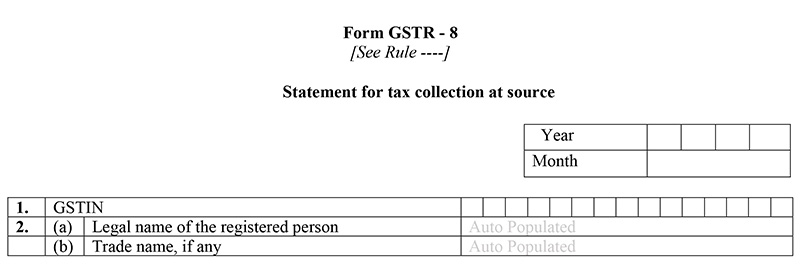
Table 1&2: Details of Taxpayer

  • GSTIN: GSTIN stands for Goods and Services Taxpayer Identification Number. The GSTIN is a 15-digit number includes 2-digit state code,10-digit permanent account number, and 3-digit includes state, future use, and check-digit. It is auto-populated when we file returns
  • Name of Taxpayer: This is the name of a taxpayer and this field is also auto-populated at the time of return filing. There is separate option to file the Trade Name if applicable
  • Month-Year(Period): The taxpayer requires to choose the date from drop down for which month and year for which GSTR-8 is being filed      

Table 3: Details of supplies

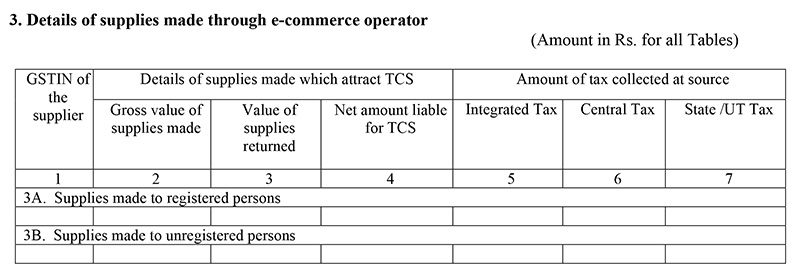
  • 3A-Fill the details of supplies made through E-commerce portal to the registered person
    • This field is for supplies made through the portal between B2B. Here taxpayer fills the details of the registered supplier who supplies goods and services to registered customers using the portal. It includes GSTIN of the merchant, the gross value of the supply made, the value of supply returned, and net amount reliable to tax
  • 3B-fill the details of supplies made through e-commerce portal to the unregistered person
    • The supplies made between the registered seller and unregistered taxpayer are to be furnished here. It includes all the same field as B2B transaction like GSTIN, the gross value of supply made, the value of returned supply, and other taxes
GSTR 8 Table 3

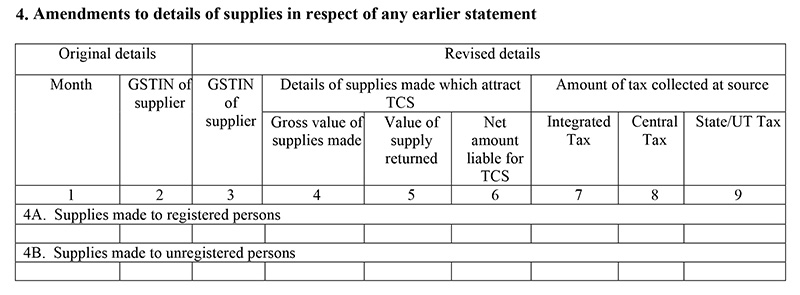
Table 4: Any amendments to supplies made through e-commerce operator to registered or unregistered person

  • 4A- amendments in table 3A of GSTR-8
    • If there is any modification under in B2B transaction supplies made through e-commerce portal during the previous month, the taxpayer can edit the details using e-commerce portal under Section 4A of the GSTR-8
  • 4B- amendments in table 3B of GSTR-8
    • If there is any modification under in B2C transaction supplies made through e-commerce portal during the previous month, it can be edited under section 4B of GSTR-8
  • Amount of tax collected at source
    • The e-commerce operators furnish this head with detailing of an amount of tax collected at source by B2B and B2C transactions. This is the important heading to be furnished by merchant based on supplies made during the month. It includes integrated tax, central tax, and state/UT tax
GSTR 8 Table 4

Table 5: Details of Interest

  • This field is auto-populated by the above headings and calculate the Tax collected at source, interest on delayed payment of TCS, and the fee for late filing
GSTR 8 Table 5

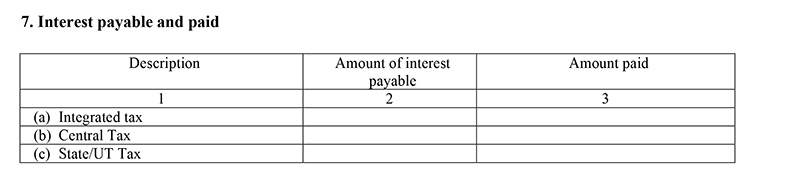
Table 6&7: Interest/Tax payable and paid

  • This field is auto-populated after filling the above details and shows the details about the tax, Interest, and fees paid or payable to the state and central government
GSTR 8 Table 6
GSTR 8 Table 7

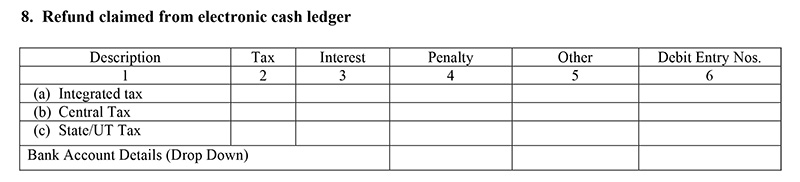
Table 8: Refunds claimed from electronic cash ledger

  • This head is furnished with the refund details claimed from electronic cash ledger and bank account details. This is auto-populated from the previous headings
GSTR 8 Table 8

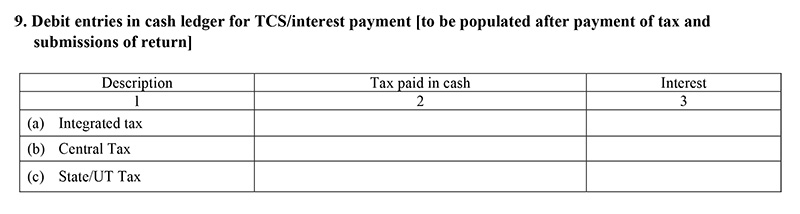
Table 9: Debit entries in cash ledger for TCS/interest payment (to be populated after payment of tax and submission of return)

  • This field is auto-populated after the payment of returns. It includes tax paid in cash and interest payment to the taxpayers
GSTR 8 Table 9

After furnishing all the information, the taxpayers need to sign electronically to authentic the details filled.

GST on Skill Development Courses is Stinging Employers & Workers

18% GST on Skill Development Courses

18% GST rate on vocational training courses is lacerating for employees as well as employers who impart training & education to their employees as a part of their Customer Social Responsibility (CRS).

According to experts, the applicability of goods and services tax (GST) on workers’ enrollment for the government’s skill development programme is highly castigated as it demotivates workers and industries as well.

At present, the employers sponsoring their employees for vocational training or individual who get themselves enrolling themselves for such courses which will get the job have to pay 18% GST on the enrollment.

Usually, the Finance Ministry plays the role of benefactor and sponsors the training fees, but many companies also provide funds as an element of their CSR to leverage the skills of their workers’. However, the payment of 18% GST on them is aching for the companies.

Read Also: Goods and Services Tax Applicability on Employees Structure

“Students pay for themselves or by sponsors find 18 per cent GST on training fees back-breaking leading to postponement or cancellation of vocational training. The training provider imparts basic vocational training to under-qualified and unskilled youth to make them employable,” said G A Soman, principal of Don Bosco Training Academy in Mumbai and former chairman of Indian Institute of Welding (IIW).

The fee of professional training goes higher when the students enrolling for them have to pay 18% GST along with the course fee and most of the students are from down and out family so it sums up financial complexity for them. The course fee for a basic steel welding is approx Rs 45,000 per student and the training fee in organised sectors like diamond & textile and unorganised sectors like plumbing ranges between 20,000 and Rs 25,000. The tax applicability on them raises the financial burden on students and their families.

IIW has appealed to the government to nullify GST on skill development courses and put them under the GST exempted category. At present, industries such as diamond processing are also encountering hefty GST onus, particularly at the times when the absorption rate decelerates.

“The industry is paying 18 per cent of GST on all processed diamonds certified by a certifying agency. When these certified diamonds are exported, the exporter gets an input credit which stands lower than the GST paid on certification as buyers do not reimburse taxes. This has resulted into GST accumulation and, therefore, blockage of working capital of diamond processors, we have proposed the government to reduce the GST on diamond certification to 5 per cent,” expressed Colin Shah, Vice Chairman, Gems and Jewellery Export Promotion Council (GJEPC).

Recommended: GST Rate Applicable to Educational & Training Services

Expenses borne by diamond processors on training and skill development are subject to reimbursement. The skill development throughout the diamond industry is tracked and managed by the National Skill Development Council (NSDC) which completely waives off the GST from vocational courses.

The Textile Sector Skill Council (TSC) which was set up as a subgroup of National Skill Development Corporation (NSDC) in the year 2014, has enrolled 147,678 trainees under different programmes brought in by it and has certified 135,391 candidates as well-trained professionals. However, at present, the nation’s economic slowdown has disrupted skill development within a new worker as well as trained employees.

“The aim of the government’s Skill India mission was to create professionals for long term. The slow rate of absorption of skilled workers is a temporary phenomenon which would overcome in six months,” statement made by Rahul Mehta, president of Clothing Manufacturers Association of India (CMAI).

Steps to Generate ICAI UDIN Registration for GST & Tax Audit Reports

UDIN Registration and Generation Process

The Institute of Chartered Accountants of India (ICAI) has announced that Unique Document Identification Number (UDIN) would be mandatory for all the certificates, GST and Tax report, and all other audits, attest and assurance functions in phases for ICAI members and practising CAs. The last date of income tax return (Audit Cases) is 30th September for FY 2018-19. The GST audit report GSTR 9C form revised due date is 30th November for FY 2017-18.

The action has been taken by (ICAI Institute of Chartered Accountants of India) to restrict illegal third-parties from representing themselves as official ICAI members to the ICAI Authorities and Stakeholders.

As per the ICAI council 379th meeting held on 17th and 18th December 2018, UDIN registration process for all the ICAI members or practising CAs was implemented in a phased manner:

  • In the 1st phase starting from 1st February 2019, UDIN is mandatory for all certificates issued by Chartered Accountants.
  • In the 2nd phase starting from 1st April 2019, UDIN is mandatory for GST & Tax Audit Reports w.e.f. 1st April 2019.
  • In the 3rd phase, starting from 1st July 2019, UDIN is mandatory for all other audits, attest and assurance functions.

Read Also: How Chartered Accountant Aspirants Motivate Themselves

All the ICAI Members have been advised by the council to strictly follow the given schedule of mandating UDIN and also adhere to the same while conducting various Audits.

It is also vital for all the practising CAs to register on UDIN portal (https://udin.icai.org/) and generate UDIN to engage in any kind of Corporate/ Non- Corporate Audit, Attest and Assurance Functions.

In order to authenticate varied documents from Regulators/Banks/Authorities/Other Stakeholders, practising CAs have to issue certificates, containing some financial figures and details. Although the ICAI has made it clear no such certificates would be required to be uploaded on the portal for UDIN generation.

Here is the detailed step-by-step procedure for registration and UDIN generation on the official UDIN website:

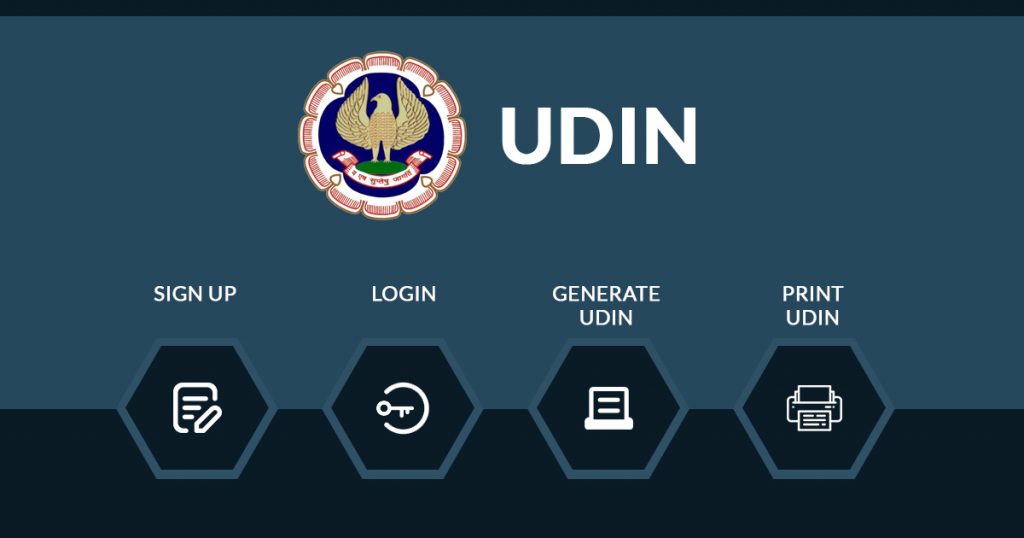
Step 1: Visit the page https://udin.icai.org

Step 2: Click on the option “For the First time sign up, click here”

Step 3: Enter details like six-digit Membership No., Date of Enrollment, DOB and click on the “Send OTP” button. An OTP will be sent on the registered mobile and email with ICAI.

Step 4: Click on “Continue”, post entering the correct OTP. Once done, the user will receive a username and system-generated password on the registered mobile and email with the ICAI.

Step 5: Login using the given username and system password. Post login, click “Generate UDIN” option.

Step 6: Provide details like Client Reference Code/Number, Date of Document, Document Issued, Document Description, Keywords/Values (minimum three) within the document, etc.

Step 7: Click on the “Send OTP”. Once done, the user will receive an OTP on the registered mobile and email id.

Step 8: Enter received OTP and click the “Preview” option. You will see the details you have entered for UDIN generation.

Step 9: If any change is required in entered details, click the button “Back” or else click the button “Submit”

Step 10: A UDIN will be generated for Further Use.

FM Foresees DTC Implementation, Considering Deficient Income Tax Collection

DTC Implementation

The last rate for tax return filing for the Fiscal Year 2019 i.e. 31st August seized a sum of 49,29,121 tax returns being filed, as per the statement made to the press by the Income Tax department. The total number of ITRs filed in last four to five days of August is quite impressive and shows 42% rise in comparison to the number of returns filed in the same days of the same month, last year.

However, the period from April to August this year remained insignificant with just 4% hike in income tax return filing as & when compared to the same period of last year.

Although the total number of the Tax return filed is higher than last year, it couldn’t bring good news for the tax officials as the number of ITR filed doesn’t make a huge difference to them but the total amount of tax collected does. Increment in the number of total ITR filed is ordinary for tax officials but the amount of tax collected was critical this time.
Tax collections are lagging far behind then the targets in FY19 and show drastic failure in the initial four months of the Fiscal Year 2020. In April-July, the aggregate tax collection was increased by just 6.6% at 5.4 lakh crore in comparison to 18.3% which is an FY20 Budget target growth. Direct tax collection increased by 5.8% at 2.2 lakh crore in comparison to last year.

The budget estimate for direct tax mop-up growth is fixed at 17.4%. Total corporate and personal tax collections were increased by just 5.4% and 6%, respectively. The nominal and real GDP growth shows a deceleration in Q1FY20 with 195-month low and 75-month low, respectively. If the growth of GDP remains stagnant like this, it will inevitably affect the tax growth adversely.

Read Also: All About Proposal Made for Income Tax Slabs & Rates by Task Force

Emphasis was made on GST collection and simultaneously the budget expectations were toned down where the budgeted collections are fixed to raise with just 3.6% in which the government may also have a little amount of surplus as the collections were increased 6.4% in April-August, 2019.

Considering the nation’s weak tax-compliance, the finance minister is marching forward towards execution of the proposal made for the Direct Taxes Code (DTC) on changes to direct income taxes. Besides, lowering the tax rates, DTC reports will also rationalise the tax rates. For example, the nil tax bracket and 20.8% rate slab for individuals earning an annual income up to `5 lakh and between 5-20 lakh, respectively, leads to a situation when an individual tries to show income less than 5 lakhs if they are earning a few lakhs more than 5 lakhs.

According to the survey conducted a research agency, the total number of individuals earning an annual income more than 1 crore was around 6.4 lakh in FY16 while the latest assessment pegs it at just 81,344.
Similarly, the total number of individuals earning an annual income between 50-100 lakh was summed up to 1.4 lakh in FY16 while the number of individuals has raised to 11.6 lakh as per the price estimation. This implies that more rational the tax rates are, the higher will be the tax collection.

IT Dept Now Helps You Generate PAN While Filing ITR via Aadhaar Card

PAN While Filing ITR via Aadhaar Card

Modi government is consistently introducing amendments in tax laws for the convenience of Indian civilians. It is in news currently that the Income Tax Department will automatically generate Permanent Account Number (PAN) for taxpayers who file their returns using their Aadhaar Number. The rule is a servant to two masters. The provision also caters to the department as in the process all the Income Tax Returns will get linked with the PAN database which will be a rigid data for their tax-related analytics.

As per the contents directly from the desks of CBDT, if any person files an Income Tax Return using his Aadhaar Card, he is deemed to have applied for PAN. He does not have to apply for PAN separately after ITR.

The rule is on its way to ruling from 1 September 2019 through the amendments included in Budget 2019. Taxpayers are benefitted not once but twice as firstly the Income Tax can now be filed using Aadhaar Card and secondly, he will get the PAN (which is a legal identity) automatically generated while filing ITR via Adhaar Card.

Notifications from Central Board of Direct Taxes said that the tax department will extract all the relevant information from the filer’s Aadhaar for PAN allotment. CBDT acts like the governor of the Income Tax Department, this is the sole policy-making body for the tax department.

In July, CBDT chairman PC Modi made it public in an interview with the Press Trust of India that the department is going to allow a new PAN number to the taxpayer who would use Aadhaar for filing Income Tax Return. The process will help to bridge the two databases for a much rigid database.

Tax Clarification in Case of Income INR 2.5 Lakh to INR 5 Lakh

Tax Clarification Income 5 Lakh

A lot of confusion has been created among people in India with the news flashing on the internet that the income tax slab has been stretched to INR 5 lakh. So, there is quite a debate among working people in India about whether they need to file returns or not, if they fall under the income slab of INR 2.5 lakh to INR 5 lakh.

A lot of confusion has been created among people in India with the news flashing on the internet that the income tax slab has been stretched to INR 5 lakh. So, there is quite a debate among working people in India about whether they need to file returns or not, if they fall under the income slab of INR 2.5 lakh to INR 5 lakh.

Many people believe that they don’t need to file their tax returns if their total income is below INR 5 lakh, which is not really True. The real fact is that no changes have been made in the income slab for the upcoming two years, i.e. FY 2019-20 and FY 2020-21 by the central government.

If we talk more about this in detail, then no Income Tax is payable up to Total Income of INR 5 lakh statement is partially correct. Confused how?

Let’s find answers to this.

The individuals do not have to pay any taxes if they are earning up to INR 5 lakh, but conditions apply clause is also added by the government.

Again there is a popular question related to this-

Is Income Tax Return Filing not Mandatory if Total Income below INR 5 lakh?

First of all, there are no changes made in Income Tax Slabs and rates for FY 2019-20 / AY 2020-21

So, one must first understand that the Income Tax Slabs for the FY 2018-19 has been retained by the government for the upcoming two fiscal years, i.e. FY 2019-2020 and FY 2020-21.

Here are the tax slabs that apply to Indian citizens:

  • Income Tax exemption limit for all Indian Citizens (below 60 years) is still INR 2.5 lakh.
  • Income Tax exemption limit for Senior Citizens (60 years or above) is still INR 3 lakh.
  • Income Tax exemption for Very Senior Citizens (80 years or above) is still INR 5 lakh.

This essentially means that Income Tax Return Filing is still mandatory even if your Total Income is above INR 2.5 lakh.

So, when does an earning individual do not have to pay any tax if his/her Total Income is up to INR 5 lakh?

Well, a noteworthy change has been introduced by the government in the Sec 87A of the Income tax act. As per the updated Sec 87A, a taxpayer is eligible to get a tax rebate up to INR 12,500, if his total income falls below INR 5 lakh.

Here is the Explanation for the Same:

  • Let’s assume a taxpayer’s Total Income = 500,000
  • Exemption Limit = 250,000
  • Taxable Income post exemption = 250,000
  • Tax on Total Income post exemption ( at 5% rate) = 12,500
  • Under Section 87A, new rebate provision= 12,500

Total Tax Payable = 0

What this essentially means is that if the total income of a working individual/citizen is INR 5 lakh or below INR 5 lakh in India, then he/she is eligible to get a tax rebate of up to INR 12,500 as per the recently modified section 87A of the Income Tax Act. So, no tax is required to be paid. But, again, one has to file the Income Tax Return, if the Total Income is above INR 2.5 lakh (in case of senior citizens INR 3 lakh and for very senior citizen INR 5 lakh).

Frequently Asked Questions

Q. Does every taxpayer whose total income falls below INR 5 lakh is eligible to get the tax rebate u/s 87A?

  • The benefit of tax rebate u/s 87A can only be enjoyed by resident individuals in India. This rebate is not applicable in case of non-residents.

Q. Suppose a taxpayer whose income is below INR 5 lakh file the income tax return post the due date. Does he/she need to pay the penalty for the same?

  • Yes, he/she need to pay the penalty u/s 234F, in case of missing the due date of income tax return filing.

Q. Does an individual whose total income exceeds INR 5 lakh is eligible for the tax rebate u/s 87A?

  • No, the taxpayers whose income fall above INR 5 lakh, are not eligible for the tax rebate u/s 87A.

Latest GST Notifications 2019 for Central Tax, Integrated Tax & UT Tax

Latest GST Notifications

SAG Infotech Blog is a source for all the 2019 latest GST notifications regarding Central, Integrated, Union Territory, Compensation cess and their respective taxes applicable. The following of latest GST notifications in accordance with proper laws, rules and rates is a must for every trading and business unit and will keep the tradition in a proper managerial way. Goods and services tax has been rolled out and almost every business unit must be working by the latest notifications being issued by the official government departments and according to the central board of excise and customs.

  • Central Tax 2019 | Central Tax Rate 2019
  • Integrated Tax 2019 | Integrated Tax Rate 2019
  • Union Territory Tax 2019 | Union Territory Tax Rate 2019
  • Compensation Cess 2019 | Latest GST Circulars/Orders
  • GST Notifications 2018
  • GST Notifications 2017

GST Notifications on Central Tax and Rate in 2019

According to the notifications over the Central tax, follow and have a look at the link and be updated through the latest update over central tax issues. Also, the notifications regarding the central tax (rate) will keep you updated through the ups and downs in the rates of central taxes. Central taxes will be levied on the basis of Central GST and will be collected by the central government from every transaction of both interstate and intrastate in nature.

Central Tax Notifications in 2019

DateNotification NumberPDF in EnglishPDF in HindiTopic
31-08-201941/2019CheckCheck“Seeks to waive the late fees in certain cases for the month of July, 2019 for FORM GSTR-1 and GSTR-6 provided the said returns are furnished by 20.09.2019.”
31-08-201940/2019CheckCheck“Seeks to extend the last date in certain cases for furnishing GSTR-7 for the month of July, 2019.”
31-08-201939/2019CheckCheck“Seeks to bring Section 103 of the Finance (No. 2) Act, 2019 in to force.”
31-08-201938/2019CheckCheck“Seeks to waive filing of FORM ITC-04 for F.Y. 2017-18 & 2018-19.”
21-08-201937/2019CheckCheck“Due date extended for filing form GSTR 3B for July 2019”
20-08-201936/2019CheckCheck“Seeks to extend the date from which the facility of blocking and unblocking of e-way bill facility as per the provision of Rule 138E of CGST Rules, 2017 shall be brought into force to 21.11.2019.”
29-07-201935/2019CheckCheck“Seeks to extend the last date for furnishing FORM GST CMP-08 for the quarter April -June 2019 till 31.08.2019”
18-07-201934/2019CheckCheckSeeks to extend the last date for furnishing FORM GST CMP-08
18-07-201933/2019CheckCheckSeeks to carry out changes in the CGST Rules, 2017.
28-06-201932/2019CheckCheckDue date extended for furnishing the declaration FORM GST ITC-04
28-06-201931/2019CheckCheckChanges brought in the CGST Rules, 2017.
28-06-201930/2019CheckCheckThe exemption provided from the furnishing of Annual Return / Reconciliation Statement for suppliers of Online Information Database Access and Retrieval Services(“OIDAR services”).
28-06-201929/2019CheckCheckSeeks to prescribe the due date for furnishing FORM GSTR-3B for the months of July 2019 to September 2019.
28-06-201928/2019CheckCheckDue date extended for furnishing FORM GSTR-1 for registered persons having an aggregate turnover of more than 1.5 crore rupees for the months of July 2019 to September 2019
28-06-201927/2019CheckCheckThe due date prescribed for furnishing FORM GSTR-1 for registered persons having an aggregate turnover of up to 1.5 crore rupees for the months of July 2019 to September 2019.
28-06-201926/2019CheckCheckDue date extended for filing returns in FORM GSTR-7
21-06-201925/2019CheckCheckDate extension from which the facility of blocking and unblocking on an e-way bill facility as per the provision of Rule 138E of CGST Rules, 2017 to be applicable from 21.08.2019.
11-05-201924/2019CheckCheck“Seeks to extend the due date for furnishing FORM GSTR-3B for the month of for the month of April 2019 for registered persons in specified districts of Odisha till 20.06.2019.”
11-05-201923/2019CheckCheck“Seeks to extend the due date for furnishing FORM GSTR-1 for taxpayers having aggregate turnover more than Rs. 1.5 crores for the month of April 2019 for registered persons in specified districts of Odisha till 10.06.2019.”
23-04-201922/2019CheckCheckProvisions notification of rule 138E of the CGST Rules w.e.f 21st June 2019.
23-04-201921/2019CheckCheckProcedure notification for quarterly tax payment and annual filing of return for taxpayers claiming the benefit of Notification No. 02/2019– Central Tax (Rate), dated the 7th March 2019
23-04-201920/2019CheckCheckThe third amendment, 2019 to the CGST Rules levied
22-04-201919/2019CheckCheck“Seeks to extend the due date for furnishing of returns in FORM GSTR-3B for the Month of March 2019 for three days (i.e. from 20.04.2019 to 23.04.2019).”
10-04-201918/2019CheckCheck“Seeks to extend the due date for furnishing FORM GSTR-7 for the month of March 2019 from 10.04.2019 to 12.04.2019”
10-04-201917/2019CheckCheck“Seeks to extend the due date for furnishing FORM GSTR-1 for taxpayers having aggregate turnover more than Rs. 1.5 crores for the month of March 2019 from 11.04.2019 to 13.04.2019”
29-03-201916/2019CheckCheckSecond Amendment (2019) to CGST Rules applied
28-03-201915/2019CheckCheckExtension of due date for furnishing FORM GST ITC-04 for the time period of July 2017 to March 2019 till 30th June 2019 has been issued.
07-03-201914/2019CheckCheckNotification No. 08/2017 – Central Tax dated 27.06.2017 in order to further extend the limit of the threshold of aggregate turnover for coming under Composition Scheme u/s 10 of the CGST Act, 2017 to Rs. 1.5 crores.
07-03-201913/2019CheckCheckPrescribed due dates for the furnishing of FORM GSTR-3B for the months of April, May and June 2019
07-03-201912/2019CheckCheckPrescribed due dates for the furnishing of FORM GSTR-1 for taxpayers having an aggregate turnover of more than Rs. 1.5 crores for the months of April, May and June 2019.
07-03-201911/2019CheckCheckPrescribed due dates for furnishing FORM GSTR-1 for taxpayers having an aggregate turnover up to Rs. 1.5 crores for the months of April, May and June 2019.
07-03-201910/2019CheckCheckRegistration exemption for a business unit engaged in the exclusive supply of goods and whose aggregate turnover in the financial year does not cross Rs 40 lakhs.
20-02-201909/2019CheckCheckExtension of due date for furnishing FORM GSTR-3B for the month of January 2019 to 28.02.2019 for registered persons having a principal place of business in the state of J&K; and 22.02.2019 for the rest of the States.
08-02-201908/2019CheckCheckGSTR 7 Due Date Extended Till 28.02.2019 for the month of January 2019
31-01-201907/2019CheckCheckGSTR 7 Due Date Extended Till 28.02.2019 (October 2018 to December 2018)
29-01-201906/2019CheckCheckAmendment notification No. 65/2017-Central Tax dated 15.11.2017 bringing effects of amendments (to align Special Category States with the explanation in section 22 of CGST Act, 2017) in the GST Acts
29-01-201905/2019CheckCheckAmendment notification No. 8/2017-Central Tax dated 27.06.2017 aligning the rates for Composition Scheme with CGST Rules, 2017
29-01-201904/2019CheckCheckAmendment notification No. 2/2017-Central Tax dated 19.06.2017 defining jurisdiction of Joint Commissioner (Appeals)
29-01-201903/2019CheckCheckAmendment of CGST Rules, 2017
29-01-201902/2019CheckCheckCGST (Amendment) Act, 2018 to come under enforcement
15-01-201901/2019CheckCheckAmendment notification No. 48/2017 modifying the definition of Advance Authorisation

Central Tax Rate Notification in 2019

DateNumberPDF in EnglishPDF in HindiTopic
31-07-201913/2019CheckCheck“which seeks to exempt the hiring of Electric buses by local authorities from GST”
31-07-201912/2019CheckCheck“which seeks to reduce the GST rate on Electric Vehicles, and charger or charging stations for Electric vehicles”
29-06-201911/2019CheckCheck“Seeks to specifies retail outlets established in the departure area of an international airport, beyond the immigrationcounters, making tax free supply of goods to an outgoing international tourist, as class of persons who shall be entitled to claim refund”
10-05-201910/2019CheckCheck“To amend notification No. 11/ 2017- Central Tax (Rate) so as to extend the last date for exercising the option by promoters to pay tax at the old rates of 12%/ 8% with ITC”
29-03-201909/2019CheckCheckAmendment of notification No. 02/2019- Central Tax (Rate) providing for the application of Composition rules to persons opting to pay tax under notification no. 2/2019- Central Tax (Rate).
29-03-201908/2019CheckCheckAmendment of notification No. 1/2017- Central Tax (Rate) notifying CGST rate of certain goods as recommended by GST Council for real estate sector.
29-03-201907/2019CheckCheckNotifying various services to be taxed under RCM section 9(4) of CGST Act as recommended by GST Council for the real estate sector.
29-03-201906/2019CheckCheckNotifying certain class of persons by levying powers conferred under section 148 of CGST Act, 2017
29-03-201905/2019CheckCheckAmendment of notification No. 13/2017- Central Tax (Rate) specifying services to be taxed under Reverse Charge Mechanism (RCM) as recommended by GST Council for real estate sector.
29-03-201904/2019CheckCheckAmendment of notification No. 12/2017- Central Tax (Rate) for exemption of various services as recommended by GST Council for real estate sector.
29-03-201903/2019CheckCheckAmendment of notification No. 11/2017- Central Tax (Rate) notifying CGST rates of various services recommended by GST Council for real estate sector.
07-03-201902/2019CheckCheckComposition scheme for a supplier of services with a GST of 6% having an annual turn over in the preceding year up to INR 50 lakhs
29-01-201901/2019CheckCheckRescinding the notification No. 8/2017-Central Tax (Rate) dated 28.06.2017 to bring in the effects of the amendments (regarding RCM on supplies by unregistered persons) in the GST Acts

GST Notifications on Integrated Tax and Rate in 2019

Integrated taxes will keep you informed and updated regarding the latest issues and rules and regulations of integrated taxes and the rates being decided the time to time. All the integrated taxes of state and central will be covered up in this section.

Integrated Tax Notifications in 2019

DateNotification NumberPDF in EnglishPDF in HindiTopic
29-01-201903/2019CheckCheckAmendment notification No. 10/2017-Integrated Tax dated 13.10.2017 bringing in the amendments (to align Special Category States with the explanation in section 22 of CGST Act, 2017) in the GST Acts
29-01-201902/2019CheckCheckAmendment notification No. 7/2017-Integrated Tax dated 14.09.2017 aligning with the amended Annexure to Rule 138(14) of the CGST Rules, 2017.
29-01-201901/2019CheckCheckIGST (Amendment) Act, 2018 to come under enforcement

Integrated Tax Rate Notification in 2019

DateNumberPDF in EnglishPDF in HindiTopic
31-07-201913/2019CheckCheck“which seeks to exempt the hiring of Electric buses by local authorities from GST”
31-07-201912/2019CheckCheck“which seeks to reduce the GST rate on Electric Vehicles, and charger or charging stations for Electric vehicles”
29-06-201911/2019CheckCheck“Seeks to exempts any supply of goods by a retail outlet established in the departure area of an international airport, beyond the immigration counters, to an outgoing international tourist.”
29-06-201910/2019CheckCheck“Seeks to specifies retail outlets established in the departure area of an international airport, beyond the immigrationcounters, making tax free supply of goods to an outgoing international tourist, as class of persons who shall be entitled to claim refund.”
10-05-201909/2019CheckCheck“To amend notification No. 8/ 2017- Integrated Tax (Rate) so as to extend the last date for exercising the option by promoters to pay tax at the old rates of 12%/ 8% with ITC”
29-03-201908/2019CheckCheckAmendment of notification No. 1/2017- Integrated Tax (Rate) notifying IGST rate of various goods as recommended by GST Council for the real estate sector
29-03-201907/2019CheckCheckNotifying various services to be taxed under RCM under section 5(4) of IGST Act as recommended by GST Council for the real estate sector
29-03-201906/2019CheckCheckNotifying certain class of persons by levying powers conferred under section 148 of CGST Act, 2017
29-03-201905/2019CheckCheckAmendment of notification No. 10/2017- Integrated Tax (Rate) specifying services to be taxed under Reverse Charge Mechanism (RCM) as recommended by GST Council for real estate sector.
29-03-201904/2019CheckCheckAmendment of notification No. 9/2017- Integrated Tax (Rate) exempting various services as recommended by GST Council for the real estate sector.
29-03-201903/2019CheckCheckAmendment of notification No. 8/2017- Integrated Tax (Rate) notifying IGST rates of various services as recommended by GST Council for real estate sector.
04-02-201902/2019CheckCheck“Seeks to rescind Sl. No. 10D of Notification No. 09/2017-Integrated Tax (Rate) dated 28.06.2017 in relation to exemption of IGST on the supply of services having a place of supply in Nepal or Bhutan, against payment in Indian Rupees.”
29-01-201901/2019CheckCheckRescinding notification No. 32/2017-Central Tax (Rate) dated 13.10.2017 bringing in the amendments (regarding RCM on supplies by unregistered persons) in the GST Acts

2019 GST Notifications on Union Territory Tax and Rate

Union Territory section of notification is formed for the overall updates of rules and laws regarding the integrated taxes and its rates being levied across the designation union territories. All the 7 union territories along with New Delhi has been applied with UTGST and here you can catch every notification regarding the union territories updates.

Union Territory Tax Notifications in 2019

DateNotification NumberPDF in EnglishPDF in HindiTopic
07-03-201902/2019Check | CorrigendumCheckThe exemption from registration for the person within the exclusive supply of goods and having the aggregate turnover in the financial year does not exceed Rs 40 lakhs.
29-01-201901/2019CheckCheckUTGST (Amendment) Act, 2018 to come under enforcement

2019 Union Territory Tax Rate Notifications

DateNotification NumberPDF in EnglishPDF in HindiTopic
31-07-201913/2019CheckCheck“which seeks to exempt the hiring of Electric buses by local authorities from GST”
31-07-201912/2019CheckCheck“which seeks to reduce the GST rate on Electric Vehicles, and charger or charging stations for Electric vehicles”
29-06-201911/2019CheckCheck“Seeks to specifies retail outlets established in the departure area of an international airport, beyond the immigrationcounters, making tax free supply of goods to an outgoing international tourist, as class of persons who shall be entitled to claim refund.”
10-05-201910/2019CheckCheck“Seeks to amend notification No. 11/ 2017- Union Territory Tax (Rate) so as to extend the last date for exercising the option by promoters to pay tax at the old rates of 12%/ 8% with ITC”
29-03-201909/2019CheckCheckAmendment of notification No. 02/2019- Union Territory Tax (Rate) providing for application of Composition rules to persons opting to pay tax under notification no. 2/2019- Union Territory Tax (Rate).
29-03-201908/2019CheckCheckAmendment of notification No. 1/2017- Union Territory Tax (Rate) notifying UTGST rate of certain goods as recommended by GST Council for real estate sector.
29-03-201907/2019CheckCheckNotifying various services to be taxed under RCM under section 7(4) of UTGST Act as recommended by GST Council for the real estate sector.
29-03-201906/2019CheckCheckNotifying Various class of persons by levying powers conferred under section 148 of CGST Act, 2017
29-03-201905/2019CheckCheckAmendment of notification No. 13/2017- Union Territory Tax (Rate) specifying services to be taxed under Reverse Charge Mechanism (RCM) as recommended by GST Council for real estate sector.
29-03-201904/2019CheckCheckAmendment of notification No. 12/2017- Union Territory Tax (Rate) exempting various services as recommended by GST Council for real estate sector.
29-03-201903/2019CheckCheckAmendment of notification No. 11/2017- Union Territory Tax (Rate) notifying UTGST rates of services as recommended by GST Council for real estate sector
07-03-201902/2019CheckCheckTo give composition scheme for the supplier of services with a tax rate of 6% having an annual turn over in preceding year up to Rs 50 lakhs
29-01-201901/2019CheckCheckRescinding notification No. 8/2017-Union Territory Tax (Rate) dated 28.06.2017 bringing in the effects of amendments (regarding RCM on supplies by unregistered persons) in the GST Acts

GST Notifications on Compensation Cess & Rate in 2019

DateNotification NumberPDF in EnglishPDF in HindiTopic
29-06-2019Compensation Cess (Rate) Notification No. 01/2019CheckCheck“Exempts any supply of goods by a retail outlet established in the departure area of an international airport, beyond the immigration counters, to an outgoing international tourist.”
29-01-2019Compensation Cess – Notification No. 01/2019CheckCheckGST (Compensation to States) Amendment Act, 2018 to come under enforcement